
The FAA’s new 2025 MOSAIC (Modernization of Special Airworthiness Certification) rule has brought significant updates to the world of light-sport aviation. The expanded privileges, aircraft eligibility, and training flexibility mean that earning a Sport Pilot Certificate now offers more opportunity than ever before. But how does the Sport Pilot Certificate compare to the Private Pilot Certificate, and which one fits your flying goals best? Let’s take a closer look.
Aircraft you can fly
As a sport pilot (post-MOSAIC)
- Performance-based limitations, may fly aircraft up to 250 knots and a maximum stall speed of 59 knots (flaps up).
- Fly aircraft with up to four seats, carrying one passenger maximum.
- May fly complex,* high-performance,** or multi-engine aircraft certified as light-sport aircraft (LSA) with proper instructor training and endorsements.
- Eligible to fly many legacy general aviation aircraft now qualifying under the new LSA definition like the Cessna 172.
As a private pilot
- No performance-based limitations beyond aircraft certification.
- May carry multiple passengers with no seat restrictions.
- May fly complex, high-performance, or multi-engine aircraft with proper instructor training and endorsements.
Summary
MOSAIC dramatically expands sport pilot aircraft options, but the private pilot certificate still allows the broadest access to the entire general aviation fleet without being limited to those aircraft certified as light-sport aircraft.
*Complex aircraft is an airplane with retractable landing gear, flaps, and a controllable pitch propeller.
**High-performance aircraft is one with an engine producing more than 200 horsepower.
Training and medical requirements
Sport pilot
- Minimum 20 hours of flight time (15 hours dual and 5 hours solo to include 2 hours cross country, and 10 takeoffs and landings).
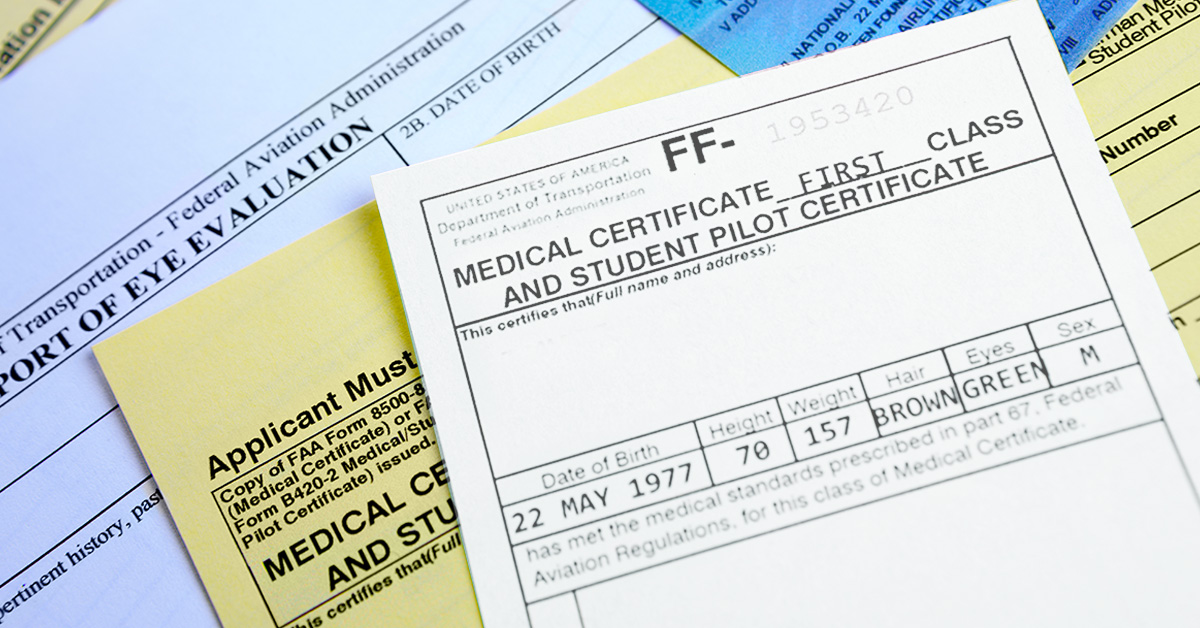
- No FAA medical exam—only a valid US driver’s license required.
- Ground school, FAA knowledge test, and checkride required.
- Typically completed faster and at lower cost.
Private pilot
- Minimum 40 hours of flight time (national average 60–70 hours).
- Requires at least a Third-Class Medical or BasicMed.
- Ground school, FAA knowledge test, and checkride required at higher proficiency levels.
- Includes training in controlled airspace, night operations, communications, and more.
Summary
The Sport Pilot Certificate offers a faster, more affordable path to flying with just 20 hours of training and no FAA medical exam required—only a valid driver’s license. The Private Pilot Certificate requires more flight time, medical certification, and includes advanced training, but provides greater privileges and flexibility for cross-country, flight in controlled airspace, and night flying.
Where you can fly
Sport pilot
- Daytime VFR only (night flying requires additional training and endorsement).
- Altitude limited to 10,000 feet MSL or 2,000 feet AGL (whichever is higher).
- Access to Class E and G airspace, and Class B/C/D with proper training and endorsements.
- Limited international privileges.
Private pilot
- May fly day or night under VFR (and IFR with additional rating).
- May operate in all classes of airspace.
- Can fly internationally.
- Not limited to one passenger.
Summary
Sport pilots enjoy plenty of freedom for local and cross-country flying, but private pilots have greater flexibility for travel, carrying multiple passengers, night flight, and advanced operations.
Cost and time comparison
| Certificate | Typical Flight Hours | Average Cost* | Completion Time |
| Sport Pilot | 20–30 | $6,000–$9,000 | 2–3 months |
| Private Pilot | 50–60 | $12,000–$18,000 | 4–6 months |
*Actual costs vary depending on aircraft type, instructor rates, and location. Completion time considers a student training multiple times a week, or full time.
Upgrading and future opportunities
- Sport Pilot Certificates can be upgraded later—hours count toward a Private Pilot Certificate.
- Private pilots can pursue advanced ratings and certificates such as instrument, commercial, and flight instructor.
- Summary: The Sport Pilot Certificate offers a fast, affordable way to begin flying and build experience, while the Private Pilot Certificate provides a long-term foundation for advanced training and professional aviation goals.
Which path is right for you?
| Your Goal | Best Option |
| I want to fly for fun, locally, and at low cost. | Sport Pilot |
| I plan to carry only one passenger and fly daytime VFR. | Sport Pilot |
| I want to fly at night, travel farther, and with multiple people. | Private Pilot |
| I may pursue advanced ratings or aviation as a career. | Private Pilot |
| I want to start flying solo as soon as possible and upgrade later. | Start with Sport Pilot |
In conclusion
With MOSAIC now in effect, the Sport Pilot Certificate has become a strong gateway into general aviation. The expanded light-sport aircraft fleet and broader training access make earning this certificate more practical than ever.
If your goal is to experience the freedom of flight on your own terms, sport pilot training may be the perfect place to start. For those seeking greater flexibility, advanced privileges, or a path to professional aviation, the Private Pilot Certificate remains the gold standard.
Featured image by murmakova at stock.adobe.com.