If you currently fly a drone—whether recreationally or under Part 107—it’s worth taking a look at how FAA drone enforcement is changing.
For a long time, the FAA leaned heavily on its compliance program for unmanned aircraft systems (UASs). If something went wrong and wasn’t intentional or dangerous, the focus was usually on education to help the operator (remote PIC) understand what happened and how to correct it. That approach hasn’t gone away, but it’s no longer being applied the same way across drone operations.
Recent policy updates now require legal enforcement action in more UAS cases, especially when the operation involves a safety risk, restricted airspace, or ties to other unlawful activity. On April 17, 2026, the FAA introduced a new enforcement tool, the Drone Expedited and Targeted Enforcement Response (DETER) program, to expedite the enforcement of certain cases.
Taken together, these changes represent a clear signal that drone operations are no longer being treated as separate from the rest of aviation. They’re being integrated into it, and UAS regulations are being enforced accordingly.
What UAS Enforcement Looks Like Right Now
The FAA sees a steady volume of drone activity, and with that, a steady number of issues—especially around airports, large events, and emergency operations. In the past, many incidents were handled through compliance education. Today, more of them are moving straight into enforcement.
That means when an incident occurs it may go through a formal process involving investigation, internal FAA review, and legal evaluation—not just an informal warning.
Recent enforcement has included the following:
- Civil penalties ranging from a few thousand dollars to $30,000+
- Certificate suspensions for remote pilots
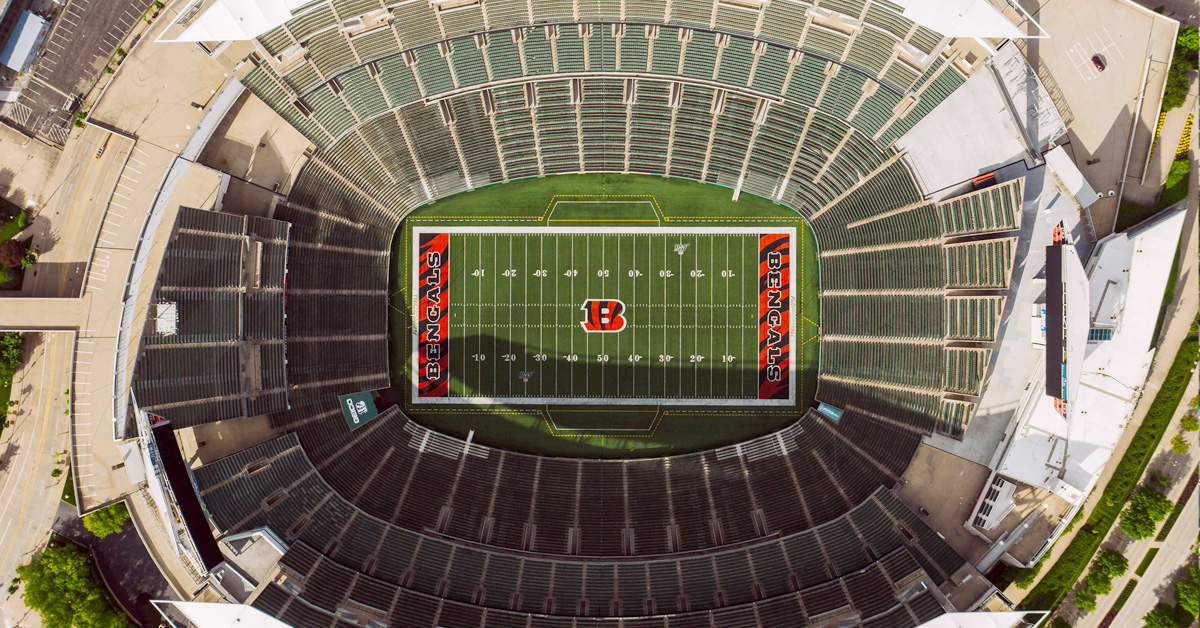
- Cases tied to wildfire operations, stadium events, and controlled airspace violations
The FAA has long had the authority to issue penalties of up to $75,000 per violation. What’s changing is how consistently that authority is being used.
What’s Getting People in Trouble
Most enforcement cases aren’t complicated. They come from situations that are easy to understand and easy to avoid.
The most common issues include the following:
- Flying in controlled airspace without authorization
- Ignoring Temporary Flight Restrictions (TFRs), especially around events
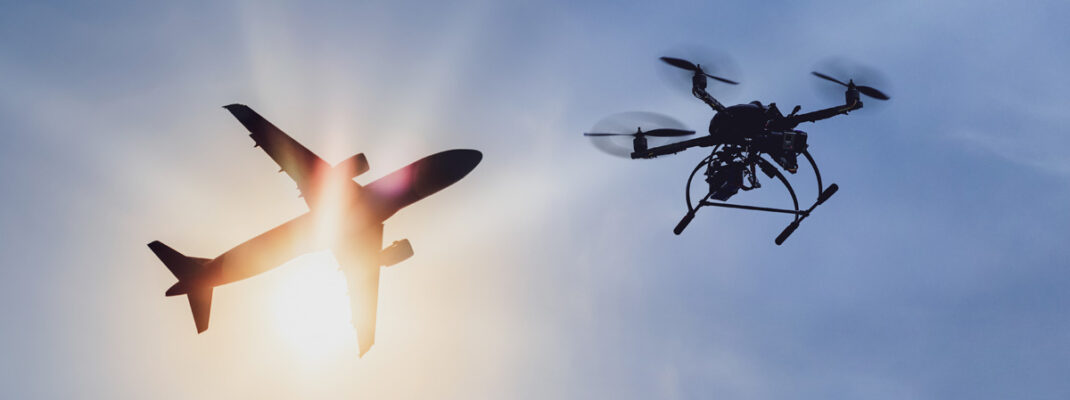
- Operating near airports or creating conflicts with manned aircraft
- Flying over people or in congested areas
- Interfering with emergency response operations
These aren’t edge cases. They’re everyday situations where something simple was missed. The difference now is that they’re more likely to result in enforcement instead of being handled informally or with education only.
How DETER Program Is Changing Enforcement
The FAA’s new DETER Program was created to resolve certain minor drone violations more quickly while maintaining safety.
How DETER Works
Instead of every case going through a long legal process, certain operators will now receive a violation notice that clearly outlines what happened, what regulations were violated, and what the proposed penalty is.
Upon receiving a violation notice, the operator has a choice to make.
- Resolve the case quickly under DETER,
- Or proceed through the full enforcement process.
If you accept the DETER resolution, you agree to do the following:
- Pay a reduced civil penalty or accept a reduced suspension.
- Complete any required corrective actions.
- Respond within 10 days.
- Waive your right to appeal.
If you decline, the FAA proceeds with the standard enforcement process, where the case is handled more formally and penalties may increase.
It’s a simple trade-off: speed and certainty versus a longer legal process with more risk.
Who Qualifies for DETER
DETER is intentionally limited. It generally applies to the following:
- Individual operators
- First-time violations
- Operational issues that do not involve serious misconduct
It does not apply to more serious cases, including the following:
- Criminal activity
- Drug or alcohol involvement
- Weaponized drones
- Temporary Flight Restriction violations
- Egregious or unsafe conduct
Those cases go straight to full enforcement.
Avoid Violations in the First Place
Most enforcement cases come down to a few common mistakes.
Operators often assume they’re clear to fly without fully checking airspace. This is especially common near smaller airports or in areas with layered airspace.
Temporary Flight Restriction (TFR) violations are another frequent issue. TFRs can be easy to miss if you’re not actively checking before each flight, but they’re also one of the fastest ways to trigger enforcement.
Flying over people tends to be overlooked as well. It may seem harmless, but it becomes a problem quickly if something goes wrong.
Operators also make a general assumption that recreational flying is less regulated. In fact, the expectations, especially around safety, are very similar to commercial drone operations.
And finally, don’t overlook these basic steps to avoid violations:
- Register the aircraft
- Use Remote ID when required
- Understand operational limits
None of these regulations are complicated. Avoid violations and FAA enforcement entirely by developing good habits and eliminating these common mistakes.
Takeaways
DETER isn’t just a new program, it reflects a broader shift in how the FAA is approaching drone operations. As drone activity continues to increase, especially in higher-risk areas, enforcement is becoming:
- Faster
- More consistent
- More visible
The FAA hasn’t abandoned education, but it has made it clear that education isn’t always the first step anymore. If you’re flying today, you should understand that enforcement is changning.
- Violations are more likely to be enforced
- Enforcement will happen faster
- Outcomes will be more formal
The DETER program gives first-time operators a way to resolve issues quickly. But the bigger takeaway is simple: drone pilots, like any other airspace user, are required to operate safely in US airspace.
Featured image by toa555 at stock.adobe.com.