

We’re focusing this week on flight instruments and today we’ll cover the attitude indicator. The attitude indicator is reliable and the most realistic flight instrument on the panel; its indications are very close approximations of the actual attitude of the aircraft. Check out our previous posts on flight instruments,
…Category: Ground School
View All Categories
This week’s discussion is geared towards the topic of aircraft performance and I thought today would be a great day to talk about crosswinds. The tree blowing across the freeway on my way into the office this morning is probably what gave me the idea. After all, March comes in
…
Out here in the Pacific Northwest, there’s a saying: if you don’t like the weather, wait five minutes. Whether or not your weather changes as fast as ours does, knowing what to expect is still critical to flight safety. Radar helps us track weather nearly in real-time and make visual
…
Fog, just like clouds, is formed when invisible water vapor in the atmosphere condenses in the air into visible water droplets. You can best think of fog as simply a cloud that reaches the ground. As a pilot you are bound to encounter fog at some point, probably sooner than
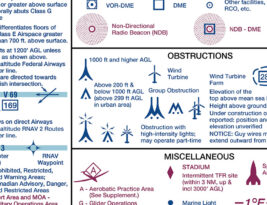
…
That little green book I’m sure you’ve seen lying around the FBO or on the briefing room table in the flight school actually packs a punch. As you learned in Monday’s post, it contains a wealth of crucial information that every pilot requires for pre-flight planning purposes. Just
…
Last week, we released the 12th edition of one of our keystone textbooks: The Complete Private Pilot. This week we’ll be covering procedures, and today we’ll introduce the Airport/Facility Directory (A/FD). Here’s what Bob Gardner has to say about it in the latest edition of …

The GPS can be a great aid for situational awareness in VFR operations. Today, we’ll introduce the basics of how the system works. We’ll go more in depth on using the GPS in future posts. Learn more about the GPS and more navigation systems and instruments in …
How should you react to the unexpected? How should you ask for help? Today we’re talking about emergency radio procedures. This post comes from our textbook The Pilot’s Manual Volume 1: Flight School (PM-1).
Request assistance whenever you have any serious doubt regarding the safety of a flight. Transmission should be slow and
…